
Surface Assessment
We probe the damage, check for soft substrate behind it, and confirm whether the surrounding area is stable. Skipping this step means the repair fails again.

Drywall and plaster repair across the Twin Cities, from lath-and-plaster fixes in St. Paul and Minneapolis to knockdown texture matching in Woodbury. Call (612) 419-2789.
Drywall and plaster repair in the Twin Cities is one of those jobs where the finish either matches or it doesn't, and there's no halfway. Whether you're dealing with a stress crack in original plaster, a patched hole that's telegraphing through the paint, or water-softened board that's lost its structural integrity, the repair has to blend invisibly into the surrounding surface. Prestige WallWorX has been doing exactly that across the Twin Cities and the surrounding area since 2010. Sixteen years of walls means we've seen every failure mode, every substrate condition, and every finish level. Call (612) 419 2789 to get an honest assessment of what your wall actually needs.
A clean repair involves more than filling a hole. On a plaster wall, we assess the lath behind it, stabilize any loose keys, and build up the repair in layers so it cures without shrinking or cracking back open. On drywall, we match the compound formulation to the application stage, feather the edges wide enough to disappear under texture, and prime the patch separately before any interior painting begins. Cost is driven by the size of the damaged area, the number of layers the finish requires, the condition of the surrounding surface, and whether the texture is a simple knockdown or a hand-applied finish that has to be re-created manually. Broadly, professional wall repair in the Twin Cities metro runs from a few hundred dollars for a localized patch to several thousand for a room with widespread damage or historic plaster that needs full water damage repair restoration. When the damage is overhead, we refinish the ceiling after repair so the patched section disappears into the surrounding surface. Every job is different. Contact Prestige WallWorX for an accurate estimate.

The patch kit from the hardware store will fill a hole. It won't match your wall. Pre-mixed all-purpose compound shrinks as it dries, which means it pulls away from the edges and telegraphs as a visible ring under raking light, especially after paint goes on. A professional repair uses setting-type compounds where the chemistry requires them, applies multiple thin coats instead of one heavy fill, and sands between stages to keep the transition flat. We don't skip the primer coat on the patch, either. Raw joint compound absorbs paint differently than the surrounding surface, so an unprimed patch will read as a dull spot no matter how many finish coats go over it. Honestly, we see more callbacks on DIY plaster repairs than almost anything else we're asked to fix.

Twin Cities homes built before 1960 almost always have original plaster over wood or metal lath. That's a very different substrate than modern drywall, and it fails differently. Plaster cracks radiating from corners are usually structural movement, not surface failure. Bubbling or soft spots mean the plaster keys have broken loose from the lath and the section has to come out entirely before anything new goes in. You can repair a plaster wall with drywall, but you have to account for the thickness differential, or the new panel will sit proud of the surrounding surface and show a hard line through every coat of finish. We match the depth, feather the perimeter, and texture to match. If the surrounding plaster is hand-troweled or sand-floated, we replicate that by hand, not with a spray can. For rooms where wallpaper is covering the damage, the repair sequence changes significantly. See our wallpaper removal and repair service for how we handle that.
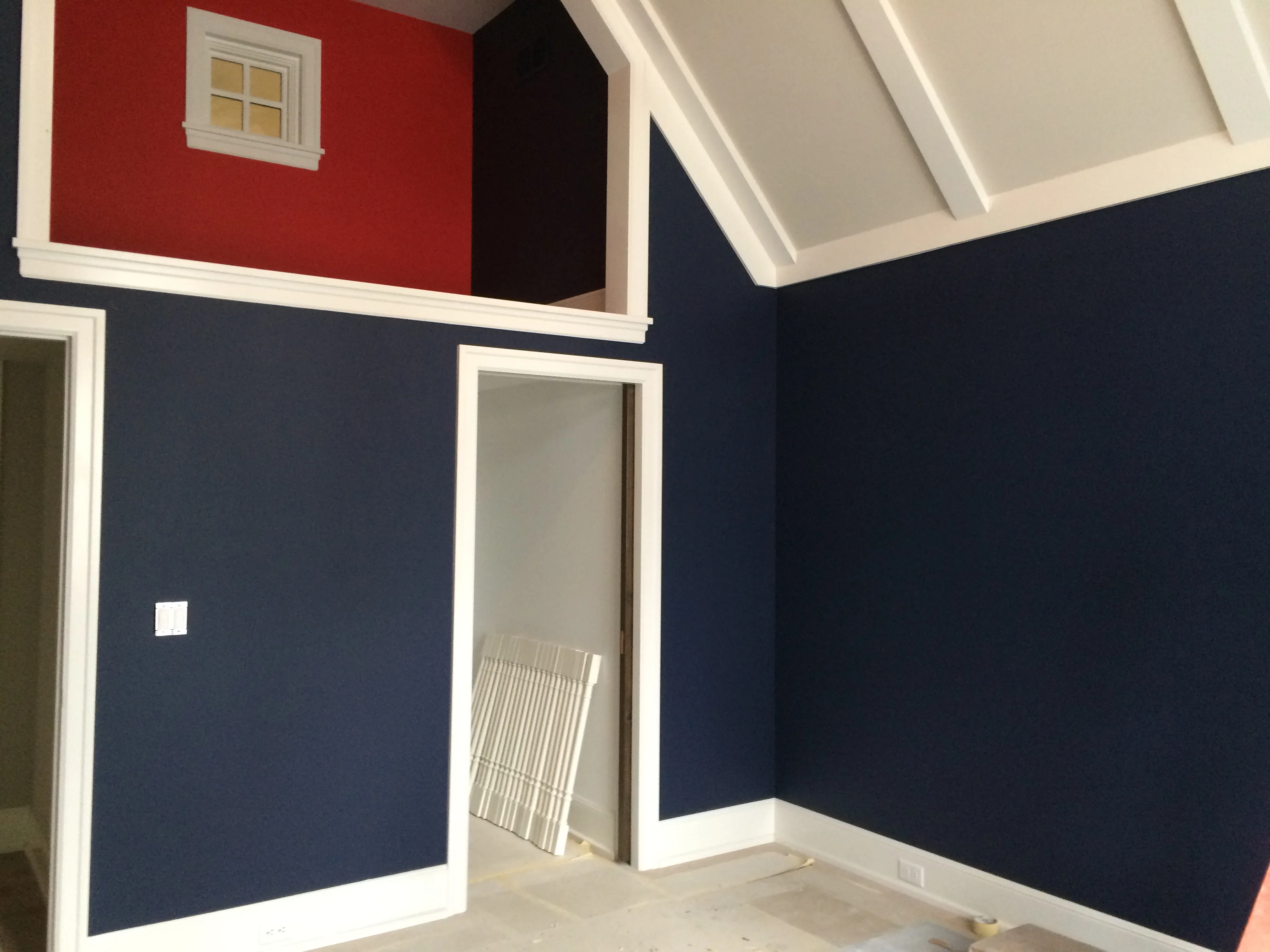
Plaster repair in Minneapolis and St. Paul is genuinely different work from patching drywall in a newer suburb, and the reason is the housing stock. Most of St. Paul's core neighborhoods, from Mac-Groveland and Highland Park to the East Side and Cathedral Hill, were built out before 1950. Those homes have real three-coat lath-and-plaster walls, not drywall. Minneapolis is much the same across South and Northeast. Gene has spent 16 years on these walls, and the lesson that repeats is that you cannot treat a true plaster wall the way a general handyman treats a sheet of board.
"On a pre-1950 St. Paul wall, the crack you can see is rarely the whole story. Half the time the plaster keys behind it have already let go of the lath, and that's what we're actually fixing."

A plaster ding, a stress crack, or a loose section gets stabilized at the lath first, then rebuilt in layers with the right compounds so it cures without shrinking back open. A skim coat over a wall whose keys have failed just cracks again by the next heating season. That's the callback we get asked to fix most often, and it's why we probe the substrate before we quote. If your walls predate 1950 and you're not sure what's behind the surface, call (612) 419-2789 and we'll tell you honestly what you're dealing with.
Textured wall repair is where most patches give themselves away, and it's the part homeowners underestimate. A filled hole can be flat and solid and still read as a patch from across the room, because the surrounding texture doesn't carry across it. Matching texture by hand under raking light is the skill that separates an invisible repair from an obvious one.
Local note: A lot of the homes we repair in Woodbury and the eastern suburbs went up from the 1980s onward with sprayed knockdown and orange-peel walls. Match the spatter size and knockdown timing wrong and the patch shows in every side-lit photo of the room.
We match to the wall in front of us rather than to whatever texture is fastest to shoot. On knockdown, that means dialing in the spatter and knifing it down at the right moment so the flattened profile matches the existing wall. On orange peel we tune the tip and pressure to the original droplet size. On older hand-troweled and sand-float plaster we build the texture by hand, because a spray can never reproduces a trowel. Then the whole repair gets primed and blended so the finish coat absorbs evenly. Textured wall repair in Woodbury and knockdown matching across the east metro is everyday work for our crew, not a one-off.
We probe the damage, check for soft substrate behind it, and confirm whether the surrounding area is stable. Skipping this step means the repair fails again.
Loose plaster keys are re-bonded or removed. Drywall edges are cut back to a clean, solid perimeter. Backing is added where the patch needs mechanical support.
We build up the repair in layers. Setting compound for the base stages, finishing compound for the final coat. Each layer dries fully before the next one goes on.
Knockdown, orange peel, smooth, sand-float, or hand-troweled. We match what's on the wall, not what's easiest to apply.
The patch gets a dedicated prime coat before any topcoat is applied. This seals the compound and ensures the finish coat absorbs uniformly across the repair and the surrounding surface.
We check the repair under both ambient and raking light before we consider the job done. If it shows, it's not finished.
Small nail holes and minor scuffs? A good pre-mixed spackling compound, a light sand, and you're done. We'd say the same to anyone. Where DIY repairs go wrong is on anything larger than about three inches, on original plaster, or on any surface that will receive a smooth or semi-gloss finish where every imperfection reads. Smooth walls are unforgiving. If the damaged area has soft or delaminated material behind it, or if the crack keeps reappearing after previous repairs, there's an underlying cause that spackling alone won't address. We won't recommend a repair scope that's larger than what the wall actually needs. If it genuinely only needs a spot touch-up, we'll tell you that.
A 4-inch hole requires one approach; a 4-foot section of delaminated plaster requires another.
Original lath-and-plaster in poor condition takes longer to stabilize than intact drywall with a clean edge.
Smooth, paint-ready walls require more sanding stages than textured surfaces.
Spray textures replicate quickly. Hand-applied finishes take skilled time to match accurately.
Repair paired with a full room repaint is more efficient than a standalone patch because the finish coat unifies the surface.

Localized drywall patch repairs in the Twin Cities for a single hole or damaged section are a much smaller scope than larger multi-area or room-level repairs. The three levers that move the cost are the size of the damaged area, the finish level the wall requires, and whether texture matching is involved. A smooth Level 5 finish costs more in labor than a standard knockdown because it takes extra sanding stages to get flat.
A few things change the price in ways homeowners don't always expect. Original lath-and-plaster in poor condition takes longer to stabilize than intact drywall, so a small plaster failure can actually cost more than a larger drywall patch. On the west-metro homes we scope in Minnetonka, Eden Prairie, and Chanhassen, pre-1980 construction on expansive clay soils tends to open the same corner and doorway cracks every year, and a one-time patch estimate on a crack that's really seasonal foundation movement is misleading, so we flag that before we quote rather than after. Repair paired with a full room repaint is more efficient than a standalone patch, because the finish coat unifies the surface and there's no cutting-in around a lone patch. And humidity-driven nail pops, which show up in bunches after a Minnesota winter of dry indoor air followed by a humid summer, are cheap individually but add up fast when a whole ceiling or hallway lets go at once. Every job is different. Call (612) 419 2789 for a flat number, or request a free estimate online and we'll price it after we see the damage.
To patch a hole in drywall correctly, cut the damaged area back to a clean square, back it with wood or a mesh-and-clip system so the patch has mechanical support, fill in thin layered coats instead of one heavy fill, feather the edges wide, then prime the patch before any paint goes on. That sequence is what keeps the repair from telegraphing later. The hardware-store kit skips most of it, which is why we get called back to redo DIY patches more than almost anything else. The right method depends entirely on how big the hole is, and the four cases below cover most of what we see.
Nail holes and minor dings. Lightweight spackle, a light sand, spot prime. Honestly, do these yourself. We'll tell you the same thing on-site.
Doorknob hits and anchor pull-outs. A self-adhesive mesh patch or a California patch, two to three thin coats of compound, feathered wide and primed before paint.
Cut back to the studs, install a backed drywall plug the same thickness as the surrounding board, tape the seams, then build the finish up in stages so the transition disappears.
Cracks that keep coming back aren't a patching problem. Something behind the surface is moving, and until that's addressed the crack returns no matter how it's filled.
We're not going to talk you into a service call you don't need. If you've got a couple of small nail holes or a minor scuff on a textured, flat-painted wall, a good spackle and a light sand is all it takes, and paying a pro to do it is a waste of your money. Where DIY goes sideways is anything larger than a few inches, anything on original plaster, and anything on a smooth or semi-gloss surface where every imperfection reads under raking light. Smooth walls are unforgiving. If a crack keeps reappearing after previous patches, there's an underlying cause that spackle won't fix, and that's the point to call us. Send us a photo and a few details and we'll tell you straight whether it's a weekend job or a job for us.
Prestige WallWorX has been operating in the Twin Cities and the surrounding area since 2010. Over that time we've repaired walls in homes ranging from new construction with standard board and texture to 1920s craftsman bungalows with original multi-coat plaster and custom sand finishes. The work we did in year one looks the same as the work we do today, because the process hasn't changed. What has changed is the speed at which we can diagnose a problem and prescribe the right fix. We carry a 5-star rating across 104 Google reviews, and that rating reflects what happens when experienced people do the job correctly the first time. If you're also considering a full refresh after the repair, our interior painting team handles the finish work seamlessly.
A look at the custom finishes, cabinetry, and interiors we've transformed across the Twin Cities.

Imagine what we could do for your home.
Call (612) 419 2789“Gene and his crew did an absolutely spectacular job with our renovations. The communication, diligence, and care was unsurpassed - from the initial discussion to the final cleanup. Gene and his team delivered everything in the scope that was asked, at an unquestionable level of quality, and went beyond the call. We…”

Ziad Lindsay-Qureshi
Verified Google review
“We reached out to Gene to help paint our cabinets, and he went above and beyond. He helped coordinate the entire kitchen facelift process. Gene gave us several options for the cabinet preparation /finish, and we elected to go with the full grain filler process. It was 100% worth the cost and time. The end result is…”

Adam Skare
Verified Google review
“Gene and his team helped wallpaper our powder bathroom and did an amazing job. He turned a builder grade home into a custom work of art and we couldn’t be happier. Gene was responsive, transparent and a joy to work with!”

Anne Bushey
Verified Google review
“We recently used Prestige WallWorX to paint our entire house prior to moving in. From the moment I reached out to Gene for a quote he was professional, organized, prompt and easy to work with. Before, during and after the job he was in regular contact with updates and ideas. The project ended up being bigger than we…”

Ellen Poeschl
Verified Google review
“Gene was prompt with his response to all of our questions, and was openly communicating through the entire project. He was adaptable and understanding when we had to delay our project by a week last minute. The quality of work is outstanding, him and Andrew helped us progress in our home renovation projects at an…”

J c
Verified Google review
Stop living with the patch that keeps showing through. Call Prestige WallWorX at (612) 419 2789 and we'll assess the damage and tell you exactly what it takes to make it right.
Call (612) 419 2789Request your free quote