
Pressure Washing
We start with a thorough pressure wash to strip surface contamination, old failing sealers, and biological growth. This isn't optional prep. It's the foundation every other step depends on.
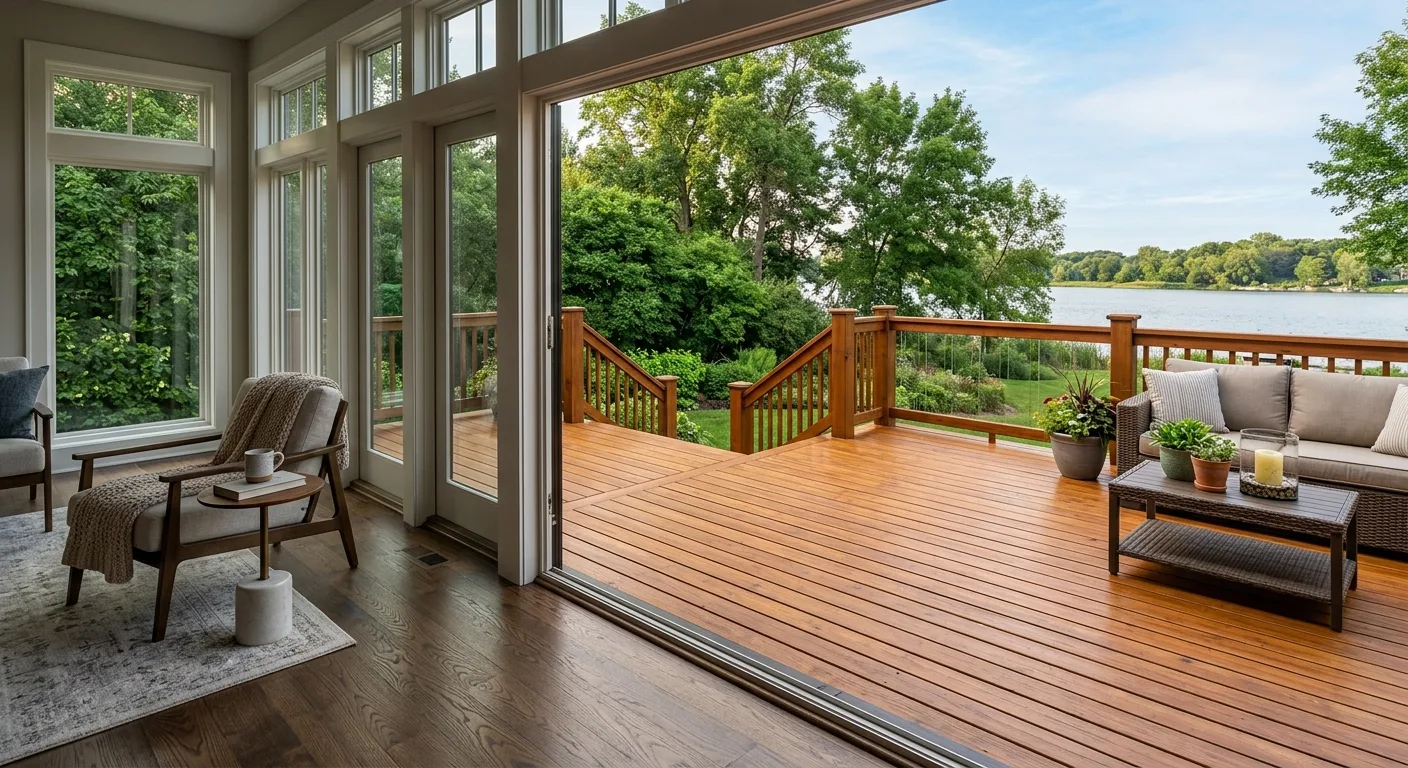
Deck staining and renewal in Burnsville, Eden Prairie, Eagan and the Twin Cities. 16 years in the trade. Free estimate. Call [(612) 419-2789](tel:+16124192789).
Deck staining and deck renewal in the Twin Cities is one of those jobs where the prep work tells the whole story. A deck that looks rough in May can look completely different by June if the surface is properly cleaned, any damaged boards are addressed, and the right stain is applied to dry, prepped wood. We've been staining and renewing decks for 16 years, from Burnsville and Eagan in the south metro out to Eden Prairie and the western suburbs, and the difference between a deck that holds color for two or three seasons versus one that peels before the first snow comes down almost entirely to process. Call (612) 419-2789 and we'll walk you through exactly what your deck needs.
Deck staining costs vary more than most people expect. Size is the obvious factor, but condition matters just as much. A deck that hasn't been touched in five years needs pressure washing, possible board replacement, sanding, and sometimes a wood brightener before a single drop of stain goes down. A well-maintained deck that just needs a refresher coat is a completely different scope. The cost comes down to square footage, deck condition, number of coats, and finish type. Every job is different. Contact Prestige WallWorX for an accurate estimate.
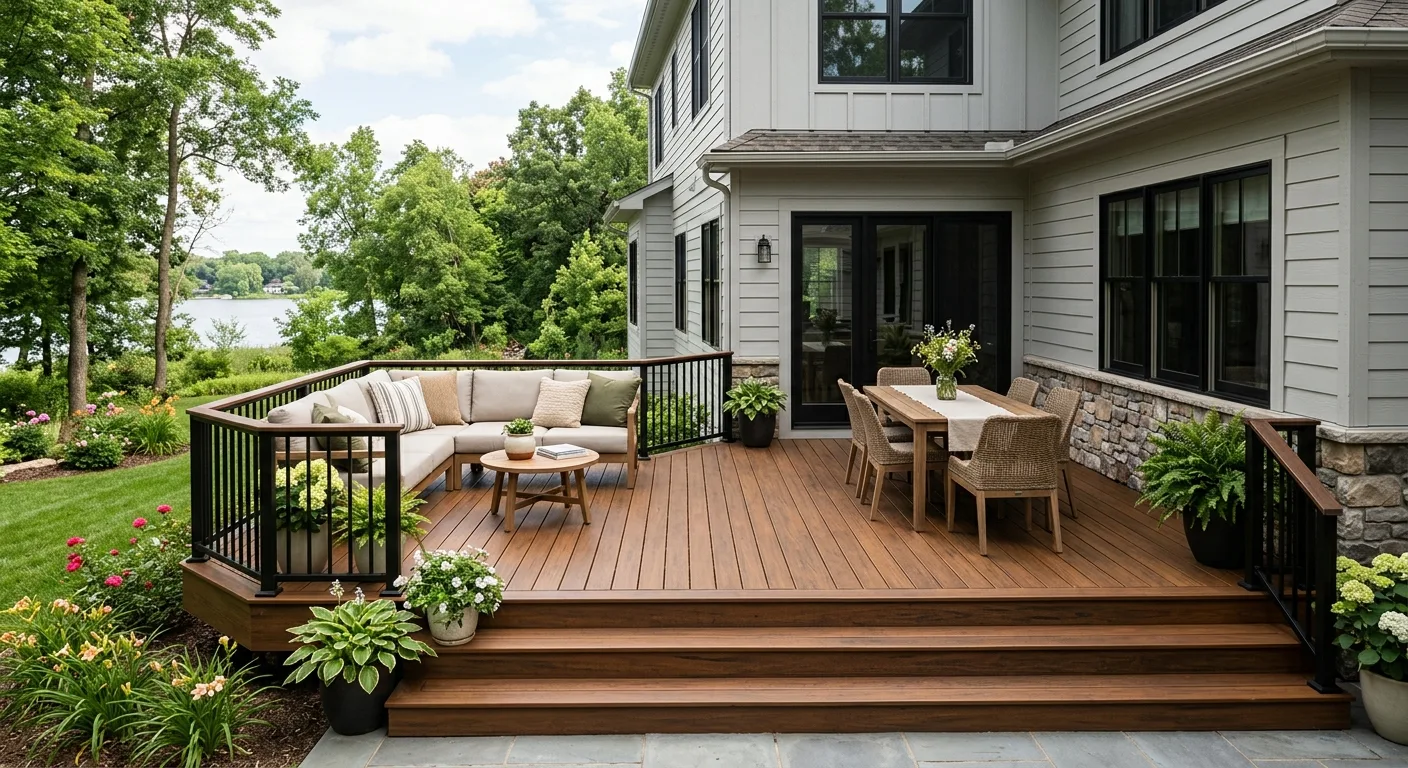
Staining a deck without renewing it first is one of the most common mistakes homeowners make. You can't put a quality finish over gray, weathered, or contaminated wood and expect it to hold. The renewal process starts with a thorough pressure wash to remove dirt, mildew, and any old sealer that's failing. From there, we inspect for soft spots, splitting boards, and any structural issues. If boards need replacement, that happens before we touch a brush. A wood brightener neutralizes the pH of the wood after cleaning, which is a step a lot of contractors skip. Skipping it means the stain doesn't penetrate the way it should. We don't skip it. Once the surface is clean, dry, and prepped, we apply the stain in the right conditions for that product. Full deck exterior painting and renewal done properly takes more than an afternoon.
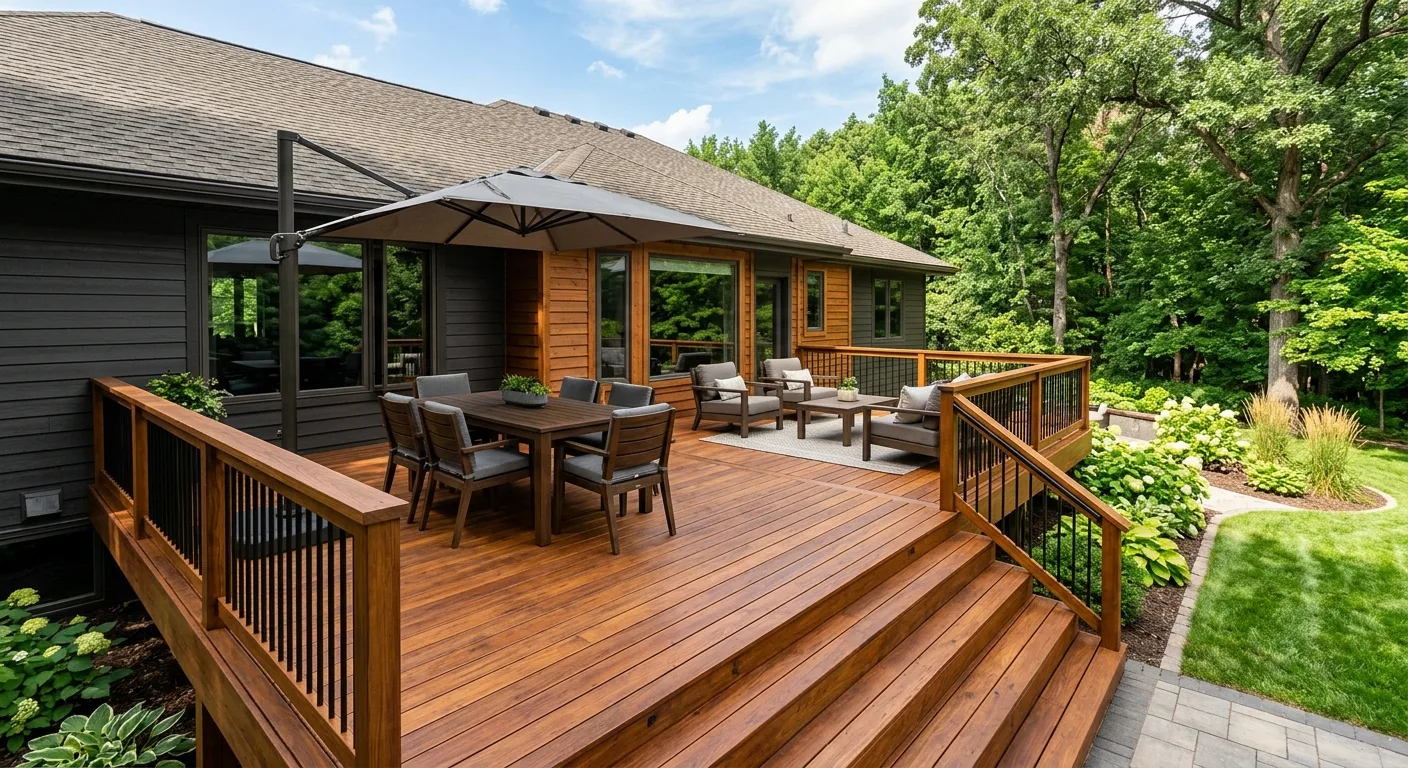
Splash some water on your deck boards. If it beads up, the existing finish is still working. If it soaks in immediately, the wood is unprotected and you need stain. That's the quick test. Full renewal is a different conversation. If you've got boards that are gray all the way through, significant cracking, mold that keeps coming back no matter how much you clean it, or a stain that's peeling in sheets rather than wearing evenly, that's a renewal project. Boards that flex under weight or feel soft underfoot are a structural issue, not a cosmetic one. We'll tell you honestly what category your deck falls into. If another company quotes you a simple stain job on a deck that genuinely needs full renewal, that quote is going to cost you more than you saved within two seasons.
We follow a consistent process on every deck job because shortcuts create callbacks and callbacks waste everyone's time. Here's what we do and why each step matters.
We start with a thorough pressure wash to strip surface contamination, old failing sealers, and biological growth. This isn't optional prep. It's the foundation every other step depends on.
After washing, we apply a wood brightener to neutralize the alkaline pH that pressure washing creates. This opens the wood grain so the stain penetrates evenly instead of sitting on the surface.
We check every board for soft spots, splits, and structural movement. Any board that's compromised gets flagged before stain goes down. We'd rather have that conversation upfront than see it fail six months later.
We apply stain to dry wood in the right weather window for the product being used. Most quality deck stains need temps above 50 degrees and no rain in the forecast for 24 to 48 hours.
We walk the deck with you before we leave. If something doesn't look right, we address it on the spot. Great service begins and ends with experienced and friendly professionals who stand behind the work.
Choosing the right stain product matters as much as applying it correctly. Transparent stains show more wood grain but require more frequent recoating, typically every one to two years. Semi-transparent stains give you some color while still showing the wood texture and last two to three seasons with good prep. Solid stains cover the wood entirely and last the longest, but they're harder to renew later because they film-build rather than penetrate. For most Twin Cities decks that see hard winters and UV-heavy summers, we typically recommend semi-transparent penetrating stains from quality lines we've worked with for years. We can also help you work through color selection if you're trying to complement your exterior painting or the overall look of your home's exterior. If you're considering a Sherwin-Williams color consultation to coordinate your deck finish with your trim or siding, we're familiar with their product lines and happy to walk through options with you.
Minnesota's short exterior season means the timing window for deck staining matters. In the Twin Cities area, the practical window runs from mid-May through early October, though conditions vary year to year. New wood is actually one of the trickier situations. Pressure-treated lumber needs time to dry out before it'll accept stain. New boards off the yard can carry 20 percent or more moisture content. You have to test before you apply. Staining too early on new wood leads to adhesion failure. On the other end of the season, October is generally fine as long as temps are staying above 50 degrees through curing time and rain isn't in the near forecast. Late staining beats skipping the season entirely. An unprotected deck going into a Minnesota winter absorbs freeze-thaw moisture cycles that accelerate wood degradation faster than UV ever does. Pair your deck project with other seasonal exterior painting work to make the most of the weather window.
There's a reason we push homeowners toward late May, early June, or the first half of September for staining, and it isn't just about avoiding rain. Mid-summer heat is the quiet killer of a good stain job. When surface temps on a south-facing deck climb into the 90s and higher in July, the stain flashes off the top of the board before it can soak into the grain. You get a finish that looks fine the day it's applied and starts sitting on top of the wood instead of penetrating it. Late spring and early fall give you moderate daytime temps, cooler board surfaces, and the longer open time that penetrating stains need to do their job. On a deck stained in July heat, the difference tends to show up by the second season.
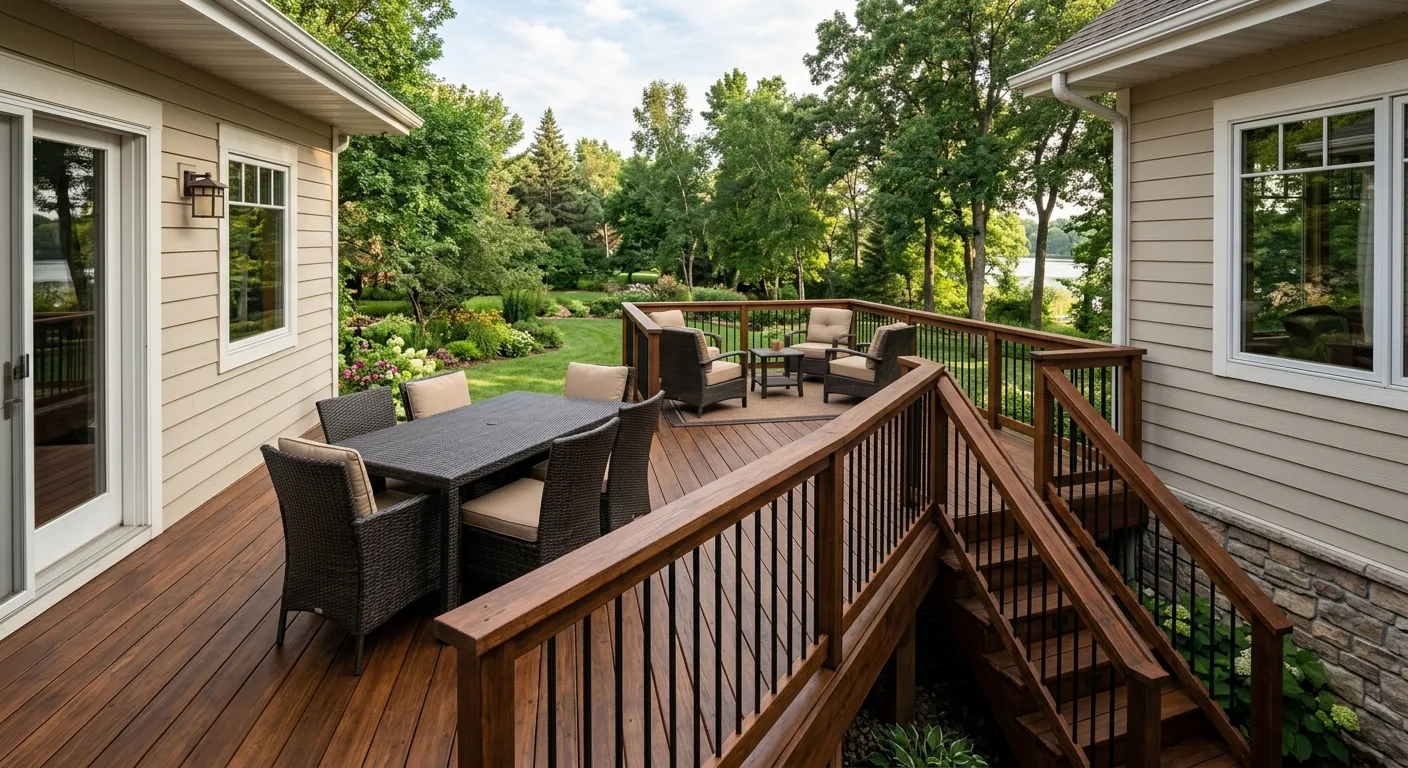
The Minnesota swing: The Twin Cities routinely runs from summer highs near 90 to January lows well below zero. That roughly 100-degree annual range is what drives the freeze-thaw cycling that greys and checks an unprotected deck, and it's why timing the stain around the shoulder seasons matters more here than it does in a milder climate.
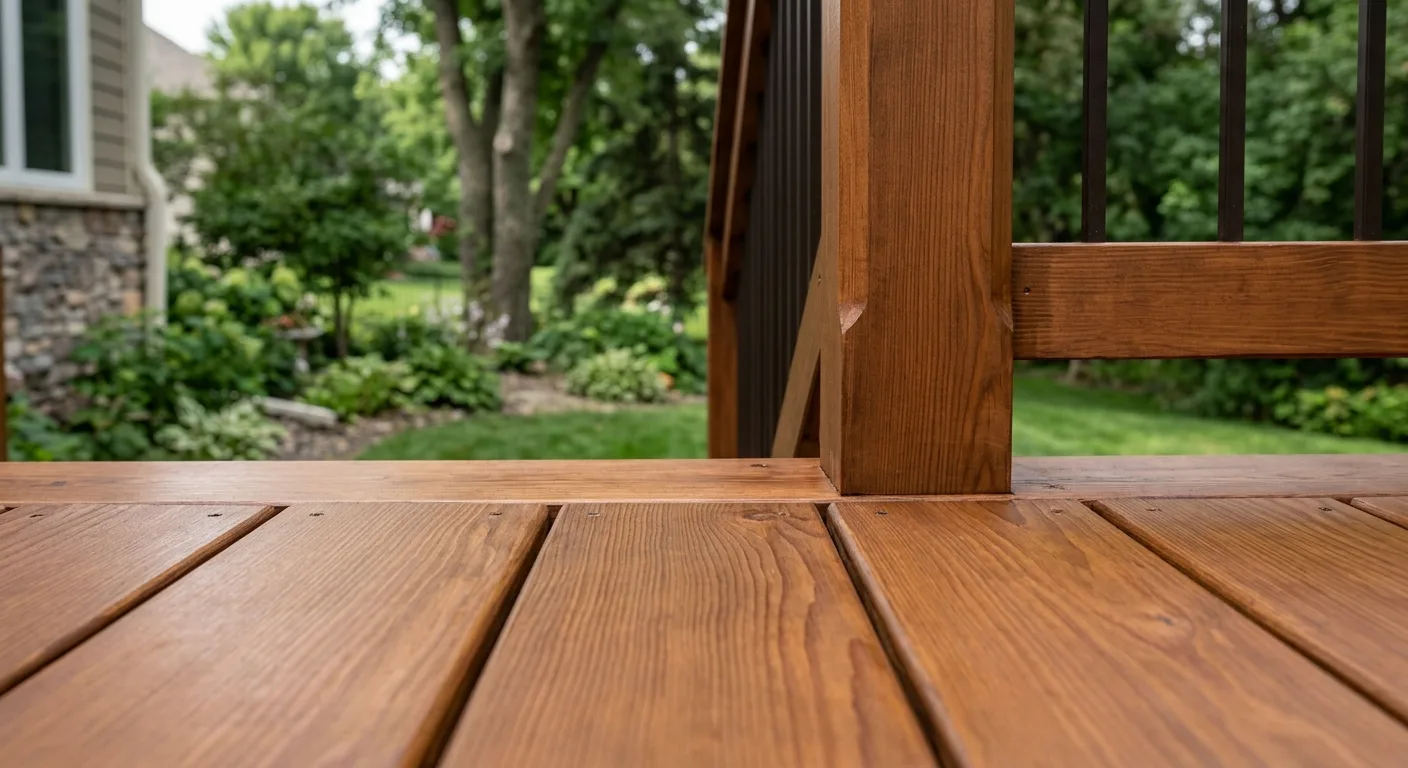
The freeze-thaw cycle is the specific thing a Minnesota deck fights that a deck in a warmer state never does. Every fall and spring, the wood in your deck boards absorbs moisture, then that moisture freezes, expands, and thaws over and over as temps cross the freezing line dozens of times each shoulder season. Water expands nearly ten percent when it freezes, so each cycle pries the wood fibers apart a little more. That's what turns an untreated deck grey and raises the surface checking and splinters you feel underfoot. A penetrating stain fills the grain and slows how much water the wood takes on, which is the entire point of staining before winter rather than waiting until spring. Exposed pressure-treated pine, which is most of the deck stock across the south metro, is the wood that greys out fastest under that cycle.
The south and west suburbs we cover each tend toward a certain kind of deck, and it usually comes down to when the area was built out. A lot of the housing stock in Eden Prairie went up between the 1970s and the early 2000s, which means plenty of those decks are on their second or third stain cycle and can carry old solid coatings that have to come off before anything new goes down. Burnsville sits about 15 miles south of Minneapolis, and decks there lean toward pressure-treated pine that greys hard on the sun-exposed south and west faces. Eagan runs a similar age profile and gets the same south-metro sun and freeze-thaw exposure. These are the deck conditions we see across the south metro, and we'll tell you honestly which category yours falls into before we quote it. **Not sure it's time yet?** Splash water on the boards. If it beads, your finish is still working and you can wait. If it soaks in, the wood is unprotected.
and we'll confirm what your deck actually needs.
Call (612) 419 2789 People use the words interchangeably, and they shouldn't. Sealing means applying a clear or near-clear water repellent that blocks moisture but offers little UV protection. Staining adds pigment, and pigment is what actually shields the wood from the sun that grays it out. On decks across the west metro, from Victoria and Chanhassen out toward the Lake Minnetonka communities, straight sealer is the reason so many decks turn silver-gray within a couple of seasons even though the owner did apply something.
The Minnesota reality: UV, not water, is what fades an unprotected deck first. A clear sealer without pigment leaves the wood exposed to the same summer sun that gray-washes a north-facing fence in one season.
For a Twin Cities deck that has to survive both UV-heavy summers and a long freeze-thaw winter, a penetrating semi-transparent stain is doing two jobs at once: the resin repels water so freeze-thaw can't work its way into the grain, and the pigment holds off the UV that would otherwise gray the surface. That combination is why we lean toward pigmented penetrating stains rather than a bare sealer on almost every deck we renew. If you want the full picture on how a stain finish coordinates with the rest of your home, we can fold it into a broader exterior painting plan. Ready to get a straight answer on what your deck needs? Call (612) 419-2789.
The two most common deck woods in the southwest metro behave very differently through a Minnesota winter, and the right approach changes with the species.
Restaining a cedar deck. Cedar is naturally rot-resistant and takes pigment beautifully, but it's a soft wood that weathers fast once the finish wears thin. On a cedar deck, we favor a semi-transparent stain that lets the grain show while still carrying enough pigment to block UV. Cedar that has gone gray is almost always recoverable: a proper wash, a wood brightener to open the grain and pull the silver back toward its natural tone, then stain onto fully dry wood. The mistake we correct most often on cedar is a previous coat that was too heavy or film-forming, which traps the moisture cedar needs to release and leads to peeling.
"We've brightened plenty of gray cedar decks in the Carver County area back to a warm tone before staining. Cedar almost never needs replacing as early as people assume. It needs the right prep."
Treated pine is a different animal. Fresh pressure-treated lumber off the yard is often still wet with treatment chemicals and can carry 20 percent or more moisture content, so a brand-new treated-pine deck usually needs to dry for several weeks to a full season before it will accept stain. Treated pine is denser and less absorbent than cedar, so it does best with a stain that penetrates rather than one that tries to build a film on top. Get either species wrong and the finish fails the same way: it peels the first spring when trapped moisture expands and contracts through the freeze-thaw cycle.
Experience That Shows across every job we complete.
“Gene and his crew did an absolutely spectacular job with our renovations. The communication, diligence, and care was unsurpassed from the initial discussion to the final cleanup. They delivered everything in the scope that was asked at an unquestionable level of quality and went beyond the call. We're enjoying the results every day.”
A look at the custom finishes, cabinetry, and interiors we've transformed across the Twin Cities.
Imagine what we could do for your home.
Call (612) 419 2789“Gene and his crew did an absolutely spectacular job with our renovations. The communication, diligence, and care was unsurpassed - from the initial discussion to the final cleanup. Gene and his team delivered everything in the scope that was asked, at an unquestionable level of quality, and went beyond the call. We…”

Ziad Lindsay-Qureshi
Verified Google review
“We reached out to Gene to help paint our cabinets, and he went above and beyond. He helped coordinate the entire kitchen facelift process. Gene gave us several options for the cabinet preparation /finish, and we elected to go with the full grain filler process. It was 100% worth the cost and time. The end result is…”

Adam Skare
Verified Google review
“Gene and his team helped wallpaper our powder bathroom and did an amazing job. He turned a builder grade home into a custom work of art and we couldn’t be happier. Gene was responsive, transparent and a joy to work with!”

Anne Bushey
Verified Google review
“We recently used Prestige WallWorX to paint our entire house prior to moving in. From the moment I reached out to Gene for a quote he was professional, organized, prompt and easy to work with. Before, during and after the job he was in regular contact with updates and ideas. The project ended up being bigger than we…”

Ellen Poeschl
Verified Google review
“Gene was prompt with his response to all of our questions, and was openly communicating through the entire project. He was adaptable and understanding when we had to delay our project by a week last minute. The quality of work is outstanding, him and Andrew helped us progress in our home renovation projects at an…”

J c
Verified Google review
Don't let another Minnesota winter take years off your deck's life. We serve the Twin Cities and surrounding area, and we book up fast once the outdoor season opens. Call (612) 419-2789 or reach out online to schedule your deck renewal and staining estimate.
Call (612) 419 2789Request your free quote