
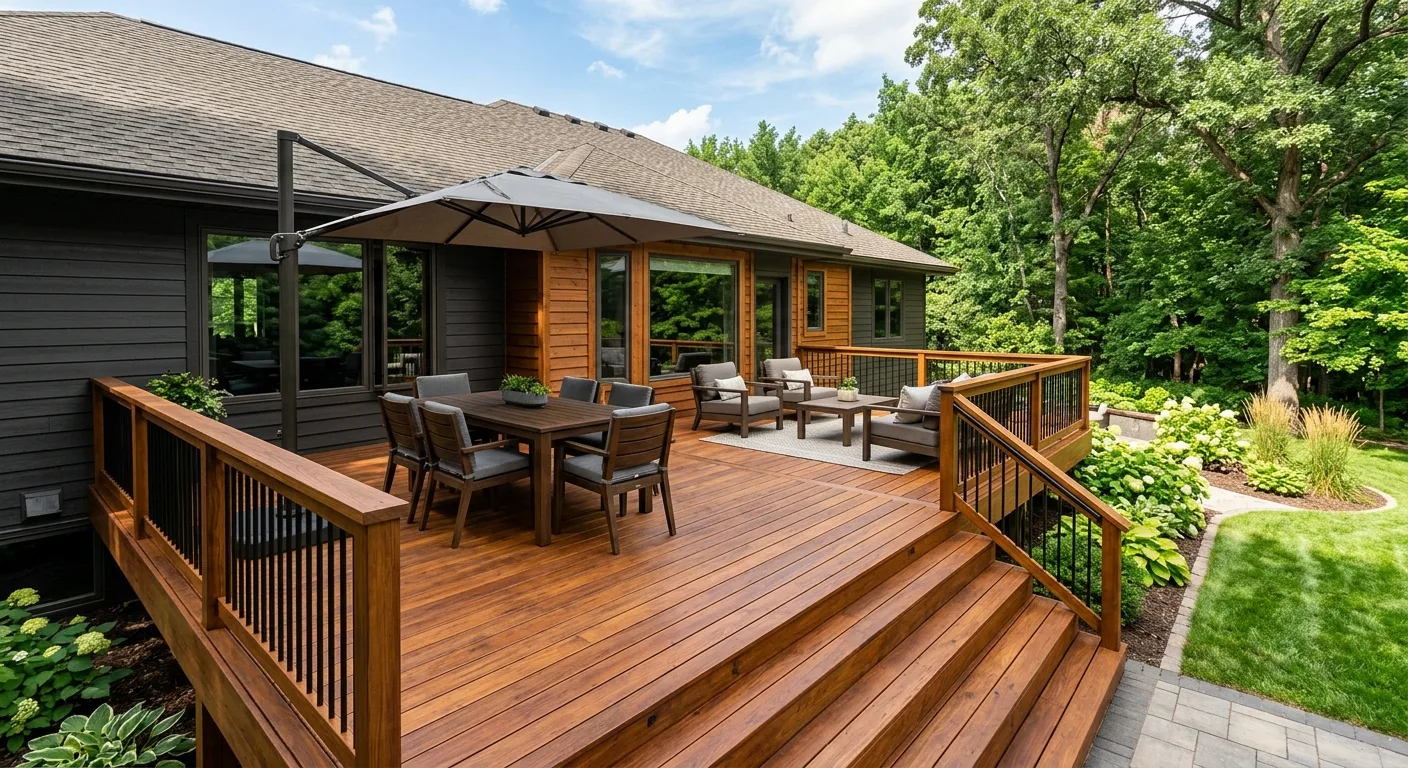
How to Stain a Fence in Minnesota (And When to Just Call a Pro)
How to stain a fence in Minnesota: the right season for the Twin Cities freeze-thaw climate, oil vs semi-transparent vs solid for cedar and pine, and when to call a pro. From Gene at Prestige WallWorX.
- 5.0 ★ · 104 Google reviews
- Serving the Twin Cities for 16 Years
- Free, No-Pressure Estimates
Why Choose Prestige WallWorX
How to stain a fence in Minnesota: the right season for the Twin Cities freeze-thaw climate, oil vs semi-transparent vs solid for cedar and pine, and when to call a pro. From Gene at Prestige WallWorX.
Staining a fence in Minnesota comes down to one thing almost nobody gets right the first time: you are not fighting the sun, you are fighting the freeze-thaw. Every spring we get calls from homeowners in Victoria, Chanhassen, and out toward Lake Minnetonka whose fence stain looked perfect last July and is peeling off in sheets by the following May. It is almost never the product. It is that the wood went into winter holding moisture the stain trapped, and our climate drove that water in and out of the grain a few dozen times between November and April until the finish gave up. Gene has been finishing exterior wood across the southwest metro for 16 years, and the rule on fences is the same one we use on decks: the finish lasts exactly as long as the prep and the moisture reading let it. If your run is short and the wood is ready, this is a real weekend job. If it is not, we will tell you that straight.

Best time to stain a fence in Minnesota
In the Twin Cities the practical window runs mid-May through early October, and the sweet spot is late spring or early fall when daytime temps sit between 50 and 85 degrees with two to three dry days on either side of the job. You are not just avoiding rain the day you stain. You are avoiding a fence that is still carrying moisture from the last one.

Front-metro reality: a cedar or pine fence needs roughly 48 hours of dry weather before it will take stain properly, and new pressure-treated pickets can read 20 percent moisture or higher straight off the yard. Stain that and it will not penetrate.
The trap most homeowners fall into is staining in the first warm week of May because they are eager to get it done. The snow is gone but the ground and the bottom rails are still damp, and that trapped moisture is exactly what pops the finish the next winter. The other trap is waiting too long. If you are staining in October, finish before a hard frost and before temps drop below 50 during the cure window, because a fence that goes into a Minnesota winter with a half-cured coat is worse off than one left bare. Late is fine. Half-cured is not.
Fence stain: oil vs semi-transparent vs solid
These three choices get mixed up constantly, and they are not the same decision. "Oil vs water-base" is about the carrier. "Transparent vs semi-transparent vs solid" is about how much pigment the stain carries, and pigment is what actually blocks the UV that grays your fence. Here is how we think about it for cedar and pine fences in this climate:

- Semi-transparent penetrating stain. This is what we reach for on most Twin Cities fences. It soaks into the grain, the resin repels water so freeze-thaw cannot work into the board, and the pigment holds off the UV that silvers an unprotected fence in a single season. Shows the wood grain, lasts two to three seasons with good prep. - Transparent or clear stain. Prettiest the day you apply it, shortest life. Little pigment means little UV protection, so it grays out fast here and wants recoating every year or two. Fine if you love the raw-wood look and do not mind the maintenance. - Solid-color stain. Builds a film on the surface and lasts the longest, so it is tempting for a big run. The catch is that a film finish is a one-way door. When it eventually fails it fails by peeling, and you are stripping or sanding rather than just cleaning and recoating. On a fence that sits in wet grass and snow, that film is also the first thing freeze-thaw attacks.
On a Minnesota fence, a penetrating semi-transparent stain is doing two jobs at once: the resin keeps freeze-thaw moisture out of the grain and the pigment keeps the UV from graying the wood. That is the combination that survives our winters.
One more thing on oil vs water-base, since people ask. Oil-based penetrating stains dig into dense cedar and older pickets nicely and are forgiving to apply, but they cure slowly and that matters in a tight fall window. Modern water-base stains cure faster and clean up easier. For most homeowner fence jobs in our area, a quality semi-transparent, in whichever carrier the product line does best, beats worrying about oil versus water. The pigment level is the decision that matters.
Why most DIY fence stain fails in its second year
Almost every failed fence we are called to fix died from one of two things, and both are preventable. The first is moisture that got sealed in. A fence picks up water from rain, from snow piled against the bottom rail, and from wet spring soil, and if you stain over wood that is still damp, the stain traps that water against the grain. Then our freeze-thaw cycling, and the metro runs through dozens of them between late fall and spring, pushes that water in and out until the finish lets go. The fix is a moisture meter and patience. If the wood reads above about 15 percent, it is not ready.
The step everyone skips: after you clean an old or graying fence, a wood brightener neutralizes the pH so the new stain can actually penetrate. Skip it and the stain sits on top instead of soaking in, which is why a lot of DIY fences look fine for one summer and peel the next.
The second failure is prep on an already-weathered fence. You cannot put a quality finish over gray, mildewed, or still-sealed wood and expect it to hold, which is the same thing we tell people about decks. Gray wood is UV-damaged surface fiber, and stain bonds to that loose fiber, not to the sound wood underneath, so it flakes off with the dead layer the next year. The real prep order is wash, let it dry fully, brighten, let it dry again, then stain only once the meter says it is ready. That drying-between-steps part is where the weekend DIY timeline usually breaks down. Call us at (612) 419-2789 if you want a second set of eyes on whether your fence is actually ready to coat.
When to just call a pro (and when not to)
Plenty of fence jobs are honest weekend projects, and we will say so. A short run of sound, dry cedar that just needs a maintenance coat is a Saturday with a pump sprayer and a brush, and you do not need us for that. Here is where it crosses the line into a call-us job:
1. Big runs before winter. A long perimeter fence is a lot of square footage, and the cure window matters. If you are racing an October frost on a fence that wraps the whole yard, a crew that sprays and back-brushes gets it coated and cured before the weather turns. A homeowner working weekends often does not. 2. Old stain that is already failing. If your fence is peeling, flaking, or has a film finish breaking down, you are into stripping or heavy sanding before anything new goes on. That is the part people underestimate, and getting it wrong means the new coat fails on top of the old one. 3. Gray, mildewed, or mixed-age wood. Washing, brightening, and getting an even result across old and new boards is where most DIY fences come out blotchy. The prep is the skill, not the brushing.
If none of those describe your fence, stain it yourself and save the money. If one or more do, that is exactly the kind of exterior wood work our deck and fence staining in the Twin Cities line is built around, and the prep process is identical to how we renew a deck. We can also fold a fence into broader exterior wood finishing if you are already planning other outside work this season.
How long does fence stain last in Minnesota?
A properly prepped semi-transparent penetrating stain holds up two to three seasons on a Twin Cities fence before the sun-facing side starts to fade and wants a maintenance recoat. Transparent or clear finishes are closer to one to two years because they carry less pigment to block UV. Solid-color stains can run longer on paper, but when they go they peel rather than fade, so the eventual redo is bigger work. The number is set almost entirely by prep and sun exposure, not the color. The south and west-facing sides of your fence take the UV beating and will always fade first, so do not be surprised when one face needs attention a year before the shaded side does.
Why does fence stain peel?
Fence stain peels for one of three reasons, and all of them trace back to prep. The most common is trapped moisture: staining over wood that was still damp from rain, snowmelt, or wet spring soil, so our freeze-thaw cycling drives that water out through the finish and pops it off. The second is staining over a failing old coat or gray, UV-damaged surface fiber, so the new stain bonds to a loose layer that flakes away. The third is using a film-building solid stain on wood that flexes and holds moisture, where the film cracks and lifts at the edges. Penetrating stains soak in and wear by fading rather than peeling, which is a big reason we lean toward them on fences out here. If your fence is already peeling, it needs a strip-and-reset, not just another coat over the top.
Get a straight answer on your Twin Cities fence
A fence is worth staining, and worth staining at the right time with the right prep so you are not back at it every spring. If your run is short and the wood is dry and sound, go do it yourself. If you are looking at a big perimeter before the frost, a failing old finish, or gray and blotchy wood you cannot get even, that is our kind of job, and our deck and fence staining in the Twin Cities process handles the wash, brighten, dry, and coat sequence the same way we do on a deck. Prestige WallWorX is owned and run by Gene out of Victoria, with 104 five-star Google reviews earned across 16 years of exterior and interior finishing in the southwest metro. Call (612) 419-2789 or request a free estimate and we will tell you honestly whether your fence is a weekend or a call.
Our Recent Work
A look at the custom finishes, cabinetry, and interiors we've transformed across the Twin Cities.
Imagine what we could do for your home.
Call (612) 419 2789Ready for a fresh, flawless finish?
Free, no-pressure estimates across the Twin Cities metro.