
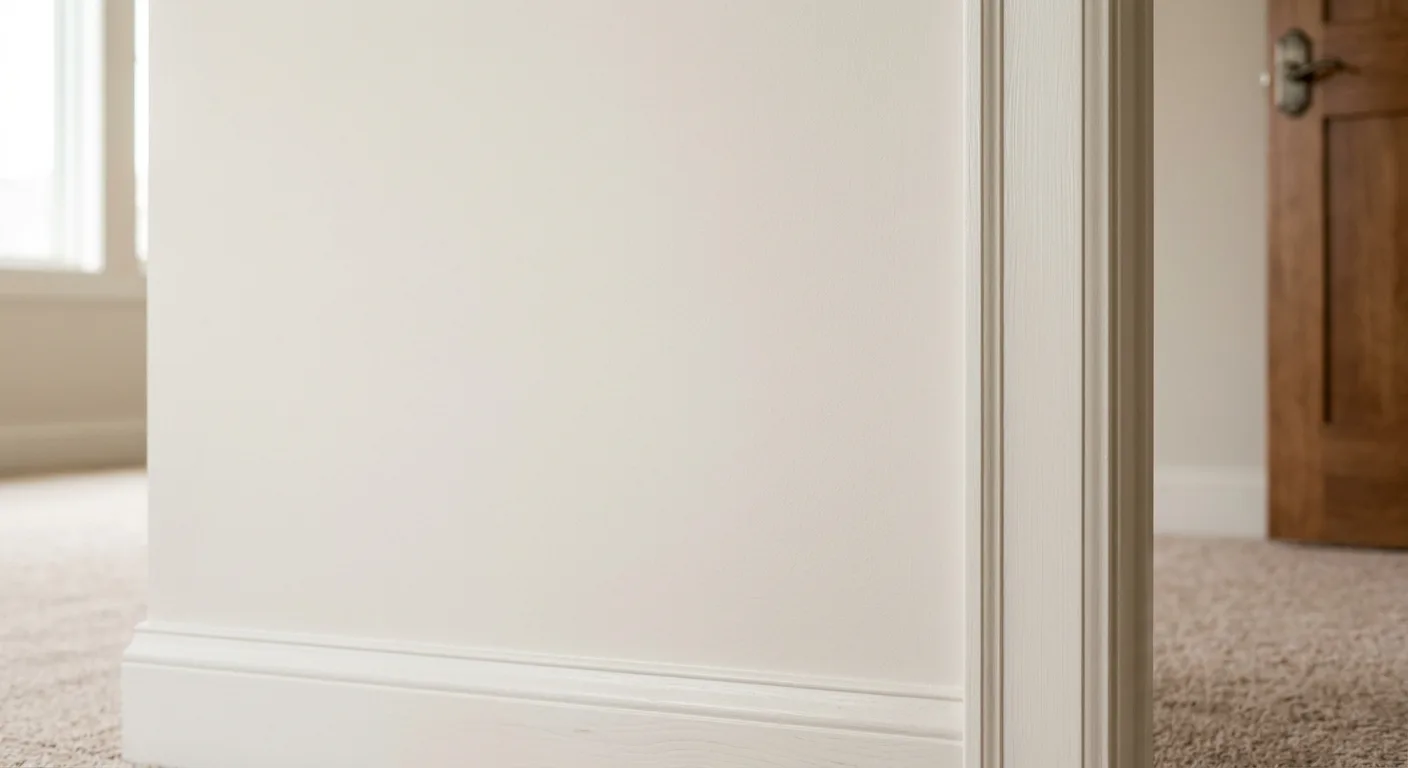
How to Repair Walls After Wallpaper Removal (Twin Cities Older-Home Edition)
How to repair walls after wallpaper removal in older Twin Cities homes: check the substrate first, deglue, skim torn paper face, and prime for glue haze before you paint. Call (612) 419-2789.
- 5.0 ★ · 104 Google reviews
- Serving the Twin Cities for 16 Years
- Free, No-Pressure Estimates
Why Choose Prestige WallWorX
How to repair walls after wallpaper removal in older Twin Cities homes: check the substrate first, deglue, skim torn paper face, and prime for glue haze before you paint. Call (612) 419-2789.
Knowing how to repair walls after wallpaper removal starts with a question almost nobody asks before they start scraping: what is behind the paper? In the pre-1960 homes we work on around Minnetonka, Edina, and Mound, the wallpaper is very often sitting on original plaster over wood or metal lath, and that wall repairs nothing like the modern drywall in a 1990s Eden Prairie build. We have pulled paper off both all over the southwest metro, and Gene's rule after 16 years is the same every time: diagnose the substrate before you buy a single tub of compound, because the fix for torn drywall is the opposite of the fix for soft plaster. Prestige WallWorX will tell you straight whether your wall is a skim-and-prime weekend or a job you want a crew on.
How to repair walls after wallpaper removal
Start by reading the wall, not patching it. After the paper is off you are looking at one of three surfaces: sound wall that just needs deglue and prime, drywall with a torn paper face, or older plaster. The repair sequence is deglue the whole wall, let it dry, assess the substrate, skim where the face is torn or gouged, then prime with a stain-blocking primer so glue haze cannot bleed through your paint. Do it in that order. Skip the degluing and nothing you skim over it will bond.
Twin Cities older-home fact: Pre-1960 homes across Minnetonka, Edina, and Mound almost always have wallpaper over plaster and lath, not drywall. Plaster takes a skim coat and primes fine, but a bubbled or soft section means the keys have let go of the lath and that area has to come out before anything new goes on.
The single most common mistake we are called in to fix is someone who skimmed and primed over wallpaper glue they thought was gone. Dried paste looks invisible when the wall is dry. The second it gets wet from joint compound or primer it reactivates, goes slick, and whatever you put on top slides or crackles. That is why degluing comes first and drying comes before you touch a trowel.
Torn drywall paper after wallpaper removal
This is the one that decides whether your job is simple or serious. Modern drywall is a gypsum core wrapped in a paper face, and that paper face is the surface your paint is supposed to bond to. When wallpaper was hung without a primer or sizing coat underneath, pulling it off tears the drywall's own paper face along with it, exposing the soft brown gypsum underneath. A few small torn spots you can glue down, seal, and spot-skim. But when the paper face is torn down to the gypsum core across a whole wall, stop.
Gene's rule on a fully torn wall: If the drywall paper face is torn to the brown core across an entire wall, that wall needs a full skim coat, not spot patches. Prime the bare gypsum first to lock it down, then skim the whole surface flat. Patch it piecemeal and every seam telegraphs through the paint the first time low light rakes across it.
Here is the honest reason that matters. Bare gypsum drinks up moisture at a completely different rate than the intact paper face around it. If you prime and paint a wall that is half torn face and half sealed paper, the two zones flash and sheen differently, and you see a ghost map of every torn patch in any raking light. A full skim coat gives the whole wall one uniform surface so it finishes even. That is a real job. If that is your wall, our professional wallpaper removal and wall repair handles the seal, skim, and finish as one sequence, and it ties straight into our drywall and plaster repair in older Twin Cities homes when the damage runs deeper. Not sure which camp your wall is in? Call (612) 419-2789 and we will come look before you buy materials.
Wallpaper glue haze under paint
Glue haze is the slick, faintly shiny or streaky film of old adhesive that stays on the wall after the paper peels off, and it is the quiet reason a repaint over old wallpaper fails. You cannot always see it on a dry wall. You find it by wiping a damp sponge across the surface: if it feels tacky or slippery, there is still paste on there. Paint over that haze and a few things go wrong, none of them good.
It will not bond evenly. The paint peels or crackles in sheets where the glue was heaviest.
The residue telegraphs through as glossy streaks that show the moment the wall gets side light.
It can bleed amber over time as the trapped adhesive discolors through a light-colored paint.
The fix is two-part. First, actually remove the glue: a wallpaper-adhesive remover or a warm water and solution wash, wiped and rinsed until the wall squeaks clean and no longer feels tacky when it dries. Second, seal it. We prime deglued walls with a stain-blocking primer rather than a standard wall primer, because a stain blocker locks down any trace haze you could not fully wash off and stops it from bleeding up through the finish coats. A standard primer soaks in and lets residue migrate. Prime the walls right and the top coats land on a stable, uniform surface instead of a chemistry experiment.
Do I need to skim coat after removing wallpaper?
Not always, and we will not upsell you into it if your wall does not need it. A skim coat is a thin, full-surface layer of joint compound that gives you one flat, uniform wall. You need it when the surface is no longer uniform: drywall with a widely torn paper face, a plaster wall with scattered gouges and chatter from the scraper, or a wall where the old paper was hiding texture or damage you now have to even out. You do not need a full skim when the wall came clean, the face is intact, and you just have glue haze to wash and prime. The test is simple. Run your hand and a work light across the wall after it is deglued and dry. If it reads smooth and even, deglue, prime, paint. If you feel torn fiber, ridges, or gouges, or you see a patchwork of textures, skim it so the whole wall finishes as one surface.
When this is a weekend job, and when it is not
Plenty of wallpaper-repair jobs are honest DIY projects and we will say so. One accent wall of sound plaster or intact drywall, paper that came off clean, a wash to kill the glue haze, a coat of stain-blocking primer, and you are painting by the weekend. Here is where it crosses into a call-us job:
1. Torn drywall face across a full wall or room. That is a full skim coat on every surface to get an even finish, and skimming a whole room flat and sanding it dust-free is a skill and a mess most homeowners underestimate. Patch it in pieces and it telegraphs. 2. Older plaster that is cracked, bubbled, or soft. In pre-1960 Mound and Minnetonka homes a soft or hollow-sounding section means the plaster keys have broken off the lath, and that area has to come out and be rebuilt to match the surrounding thickness, not just skimmed over. Depth matters: a drywall patch set into a plaster wall sits proud and shows a hard line through every coat unless the transition is feathered right. 3. Whole rooms before a repaint. If you are stripping paper off several rooms to repaint, the degluing, skimming, sanding, and priming is a lot of square footage done in the right sequence, and a crew gets it done flat and uniform far faster than weekends allow.
If none of those describe your wall, strip it, wash it, prime it, and paint it yourself. If one or more do, that is exactly the work our wallpaper removal and wall repair and drywall and plaster repair lines are built around.
Do I need to prime after removing wallpaper?
Yes, almost always, and the primer you choose matters more than people think. After you deglue and let the wall dry, prime before you paint, and use a stain-blocking primer rather than a standard wall primer. Here is why: even a wall that washed clean usually has a trace of adhesive film left, and a stain blocker locks that down so it cannot reactivate or bleed amber through your finish coats. It also seals any bare gypsum or fresh skim coat so the whole wall absorbs paint at the same rate and finishes without flashing. The only wall that would not need a primer is a perfectly clean, previously painted surface with zero adhesive and no repair, which is rare after a wallpaper pull. When in doubt, prime, and prime with a stain blocker.
Get a straight answer on your Twin Cities walls
Repairing walls after wallpaper removal is worth doing once and doing in the right order: deglue, dry, read the substrate, skim where the face is torn or the plaster is gouged, and prime with a stain blocker so glue haze never surfaces through your paint. If your wall came clean and you just need to wash, prime, and paint, go do it. If you are staring at drywall torn to the brown core, cracked or soft plaster in an older Minnetonka or Edina home, or whole rooms to reset before painting, that is our kind of job. Prestige WallWorX is owned and run by Gene out of Victoria, with 104 five-star Google reviews earned across 16 years of interior finishing in the southwest metro. Call (612) 419-2789 or request a free estimate and we will tell you honestly whether your walls are a weekend or a call.
Our Recent Work
A look at the custom finishes, cabinetry, and interiors we've transformed across the Twin Cities.
Imagine what we could do for your home.
Call (612) 419 2789Ready for a fresh, flawless finish?
Free, no-pressure estimates across the Twin Cities metro.